
The Summit We Reach Together
Ask Bob what he remembers most about climbing Mt. Kilimanjaro, and he doesn’t begin with the summit. He begins with the memory of waking each morning to the sound of singing.
Before sunrise, while the rest of the climbing team packed for another day on the mountain, Rebecca and Loveness filled the campsite with songs. By breakfast, they were greeting him with a cheerful, “Habari ya asubuhi, Babu!”—“Good morning, Grandpa.” By the end of the week, they were teaching him Swahili.
Somewhere between those early mornings, shared meals, long days on the trail, and countless reminders to move pole pole—slowly, slowly—four people who had arrived at Mt. Kilimanjaro by very different paths became a team.
Summit for SEGA may have begun as a challenge to climb Africa’s highest mountain. But over seven days on the mountain, it became a story of friendship, perseverance, and the many ways we carry one another toward places we might never reach alone.
Long Before the Mountain
The friendships formed on Mt. Kilimanjaro took shape in just one week. The journeys that brought each climber there had been unfolding for years.
For Bob, a longtime Nurturing Minds supporter, the path to Mt. Kilimanjaro began unexpectedly in Bali. While attending a U-GO event with his wife, Jodi, he first heard about Summit for SEGA. The idea carried a remarkable connection: 25 years earlier, the same year she and Bob met, Jodi had climbed the mountain herself. She encouraged Bob to take on the challenge and supported him through months of fundraising and preparation. Before long, Bob invited his brother, John, to share the journey with him.
For Rebecca and Loveness, the journey stretched back much further. Years before either imagined standing on Africa’s highest peak, they had embarked on a journey that would change the course of their lives: attending SEGA Girls’ School. There, years of education, mentorship, and encouragement helped broaden what they imagined for their futures and build the confidence to pursue opportunities beyond what they already knew. Mt. Kilimanjaro was certainly one of them. Neither Rebecca nor Loveness had imagined herself climbing a mountain. Neither considered herself a hiker. Yet when the opportunity came, they said yes.
Looking back, Rebecca imagines that “the girl who first arrived at SEGA would probably have been surprised and proud” to see where that willingness to embrace new possibilities had taken her.
The four climbers' journeys began in different places, at different times, and for very different reasons. Eventually, they would lead to the same mountain.
Pole Pole
On Mt. Kilimanjaro, there is a phrase climbers hear again and again: pole pole, meaning slowly, slowly.
At first, Rebecca understood it simply as an instruction: respect the altitude, conserve your strength, take the mountain one step at a time.
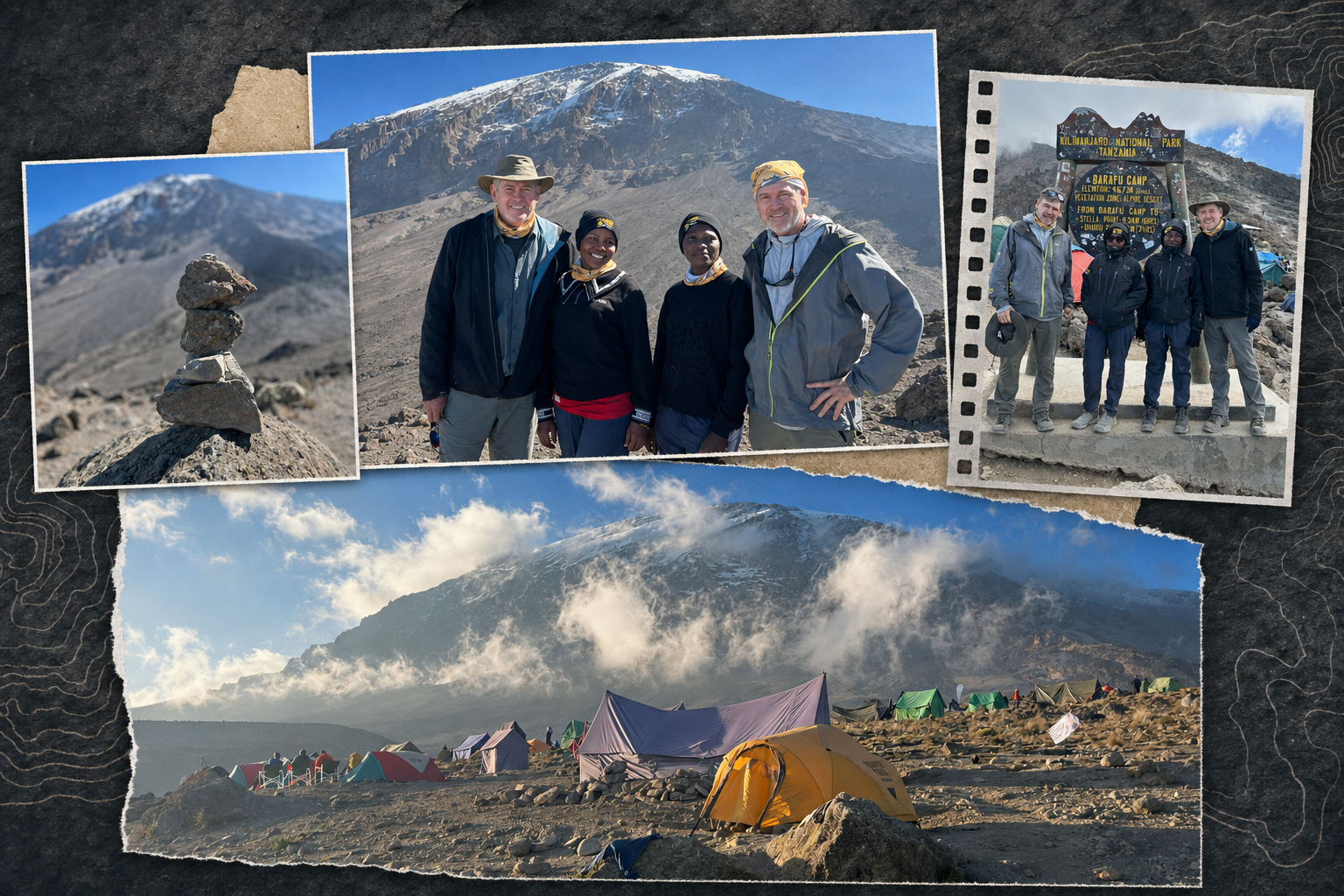
Then came summit night.
The air was bitterly cold and thin. Hours of climbing stretched ahead in the darkness. Rebecca battled exhaustion and the effects of altitude. Loveness reached a point when she seriously questioned whether she could continue.
But no one was climbing alone.
John remembers the four climbers moving in formation behind their lead guide, Eliakimu, concentrating on their breathing and following his footsteps through the darkness. As the night grew colder and harder, the guides began singing traditional Swahili mountain songs. “Their voices lifted our spirits and helped us keep moving,” John recalled. “Sometimes, just a few encouraging words, or seeing my teammates continuing ahead was enough to carry me forward.”
The guides saw that support moving among the climbers, too. Summit day, they recalled, was when “we saw the four really support each other and work together,” with each encouraging the others at different moments. For Loveness that support sometimes took an even simpler form. When she had little energy left, a friend held her hand, a small gesture that meant a lot. On her end, Rebecca stopped thinking about how much mountain remained and focused instead on the next step. “Sometimes you don’t need someone to carry you physically,” Rebecca reflected. “You simply need someone to remind you that you are capable of taking the next step.”
And so they kept moving. Pole pole.
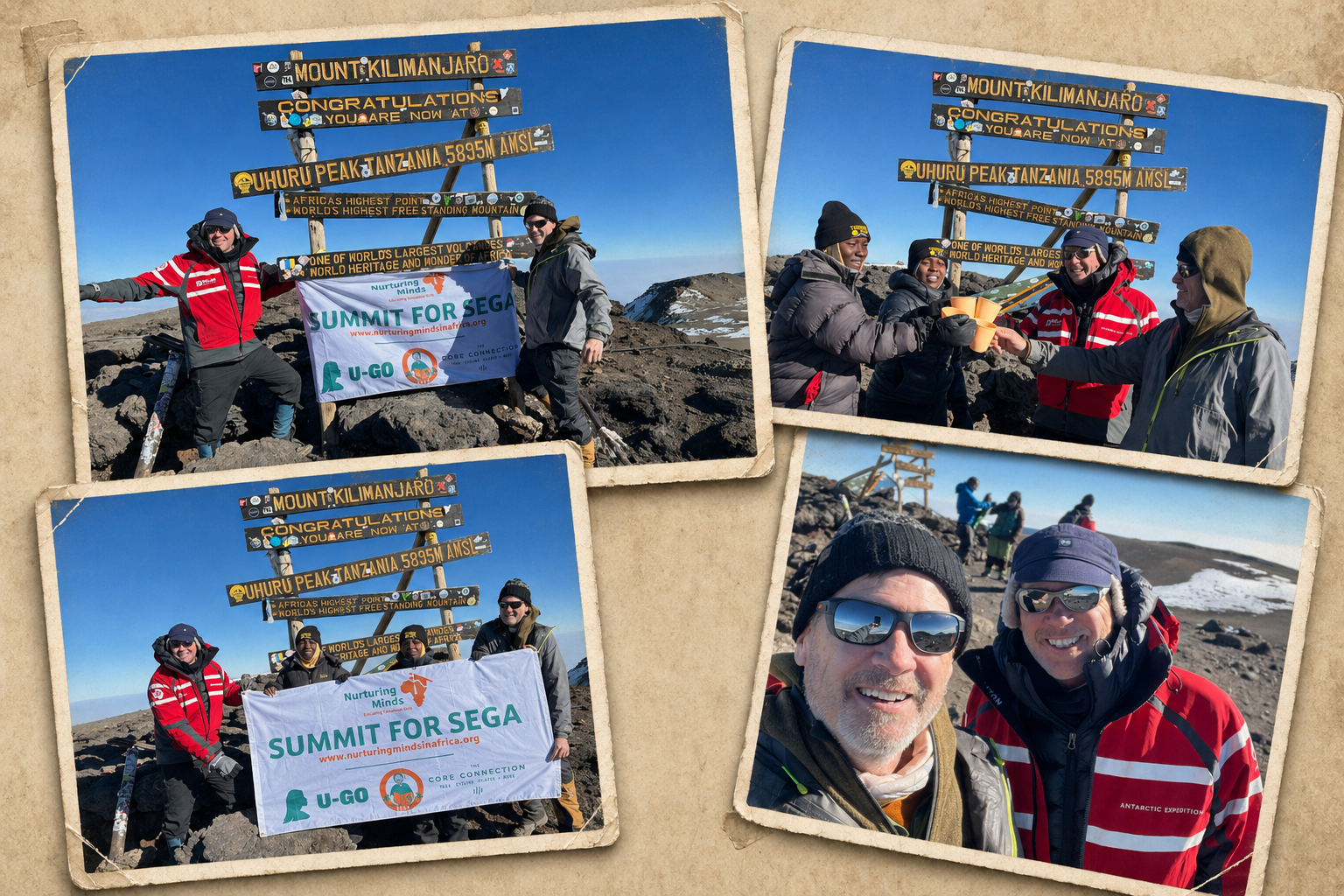
After more than eight difficult hours, all four reached the summit.
Bob remembers the embrace they shared at the top—four climbers, exhausted and overcome with emotion, while Loveness remembers the sunrise. Before the climb, she had thought Mt. Kilimanjaro was “only for tourists, not for the local people.” Now she stood at Uhuru Peak, watching the sun rise over Tanzania. The moment carried a special significance for the guides, too. Accustomed to guiding visitors from around the world, they described sharing the mountain with Rebecca and Loveness, their fellow Tanzanians, as something special. To them, the two young women represented “the future generation of leaders in Tanzania.”
Somewhere along the way though, pole pole had taken on a different meaning. For Loveness, it became a lesson in patience—big goals could be reached one small step at a time. For Rebecca, it had become “a lesson about life.” Progress, she learned, did not have to be fast to be meaningful.
Step by step. Pole pole. And never entirely alone is how they made it to the Summit.
Carried by a Community
The four climbers may have taken the steps, but a much larger community helped make the journey possible.
U-GO provided a pivotal $50,000 matching gift, helping build momentum around Summit for SEGA and inspiring donors to make their generosity go even further. For U-GO, the climb became a powerful reflection of what collective action can make possible.
“Summit for SEGA was a physical manifestation of the power of community to take on a big, audacious task,” shared Amy, Chief Marketing Officer at U-GO, “and show that working together we can make the impossible possible if only given the opportunity to make it happen.”
The Core Connection added a generous sponsorship, while Gary Bagnall, Kate Heath, UBS & The Dolce Group, ACIS Educational Tours, Nomad, Let’s Venture, AFRISOS, and individual donors around the world rallied behind the campaign. Together, that community helped Summit for SEGA raise more than $115,000 for SEGA’s Continuing Education Scholarship Program.
Tusker Trail made another essential part of the journey possible, bringing decades of Mt. Kilimanjaro expertise to the climb and sponsoring Rebecca and Loveness’s participation. For founder Eddie Frank, the decision reflected a belief shaped by years spent in Tanzania. “I’ve always believed that strong young women should be given every chance to push beyond what the world expects of them,” he shared. Watching Rebecca and Loveness climb only reinforced that belief. “That mountain reveals a lot about a person—courage, grit, determination. They brought all three.”
That support continued every day on the mountain. John credits the entire 24-member Tusker Trail crew with making the summit possible from carrying equipment, preparing meals, setting up camp, monitoring the climbers’ health, and somehow remaining encouraging through the mountain’s most difficult conditions. As he put it “we may have walked every step ourselves, but we certainly did not reach the summit by ourselves.”
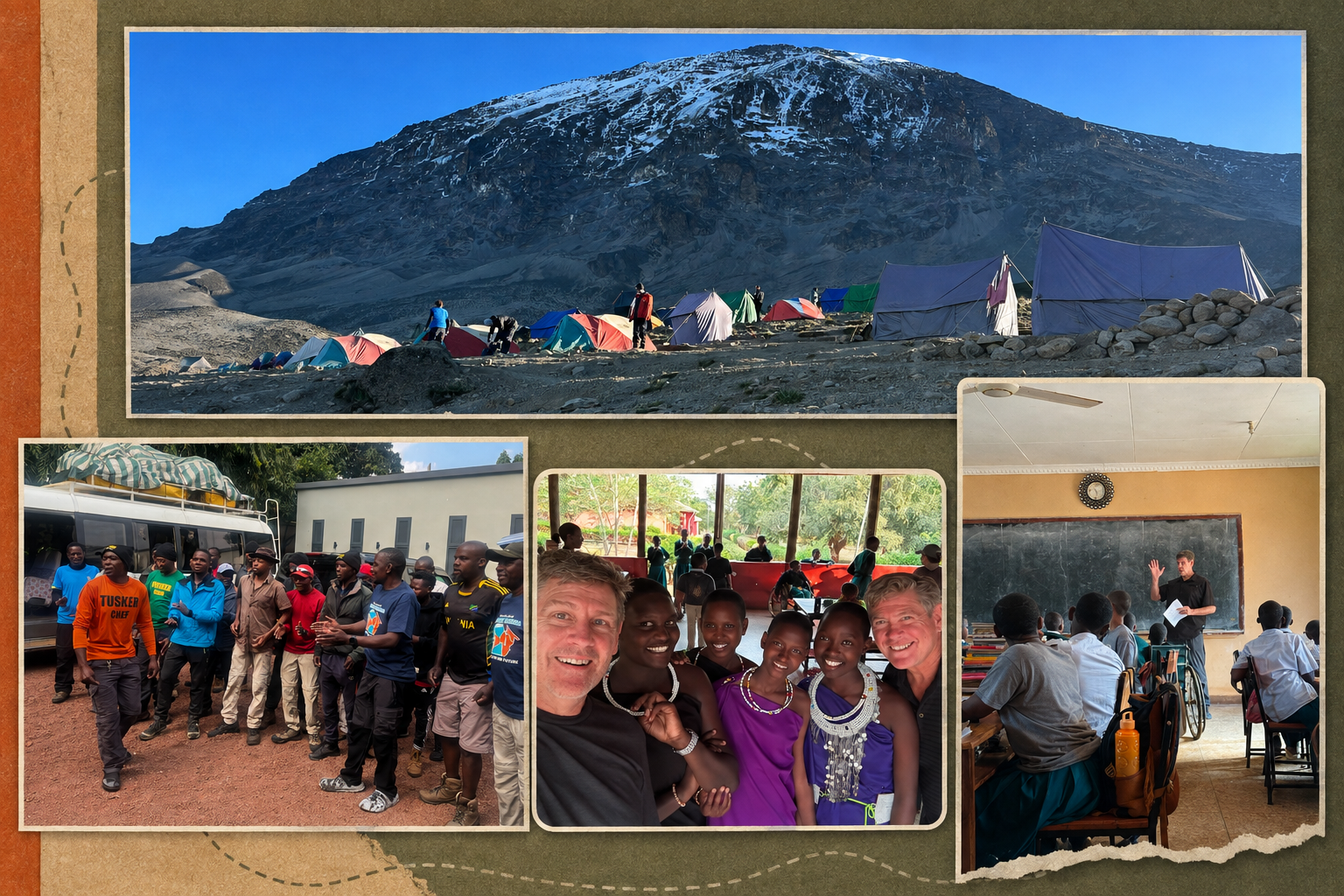
From the donors who rallied behind the campaign to the families and friends who supported months of preparation, and the guides and porters who brought their strength, expertise, and encouragement to the mountain, each played a different but very important role in the journey.
Together, they helped four climbers reach the summit, and supported more SEGA graduates in continuing their own journeys through education.
What We Carry Forward
Reaching the summit could easily have been the end of the story.
Rebecca and Loveness had just climbed for more than eight difficult hours. They were exhausted. Bob asked if they wanted to make a video. They jumped up. “Girls can do anything!” Even at the summit, they were already thinking beyond it.
Loveness thought about the younger girls at SEGA who might one day see her standing there. She hopes they will look at what she accomplished and think, If she did it, I can do it too.
Rebecca carries a similar hope. She wants younger SEGA girls to know that their dreams are not limited by where they come from or the challenges they face, that they, too, are capable of difficult and extraordinary things. For John, getting to know Rebecca and Loveness made the impact of girls’ education deeply personal. Later, he learned that a SEGA student he had met while teaching a math class was inspired to consider studying mathematics herself. “Even a relatively brief investment of time, encouragement, or financial support can influence the direction of a young person’s life,” he reflected.
Years earlier, Rebecca and Loveness had arrived at SEGA and begun discovering possibilities they had not yet imagined for themselves. Now, standing on Africa’s highest mountain, they had become the ones expanding that sense of possibility for someone else.
Perhaps that is what we carry forward from Mt. Kilimanjaro: the belief someone placed in us, the hand that steadied us, the voice that reminded us to take one more step, and the responsibility to offer the same to someone coming behind us.
Because at the end of the day, no journey is carried by one person alone, but one journey can make the next feel possible. Pole pole. One step at a time.
Your Journey Could Be Next
In 2027, Summit for SEGA will return to Mt. Kilimanjaro—and Tusker Trail is ready to guide another group toward the summit.
Whether taking on Africa's highest peak has been a lifelong dream or is something you never imagined for yourself until now, this could be your invitation to take the first step.
Join a community climbing together in support of the next generation of SEGA girls and young women—and discover where the journey might lead you.
Interested in the Summit for SEGA 2027? Add your name to our interest list to be among the first to receive details about the next climb.