Learning, Teaching & Growing: Luiza’s Journey at SEGA
A Baker Hughes volunteer reflects on two weeks that changed how she sees girlhood, education, and opportunity in Tanzania.
When Luiza Souza stepped off the plane in Tanzania, she expected an unfamiliar country.
What she didn’t expect was the warm welcome she received.
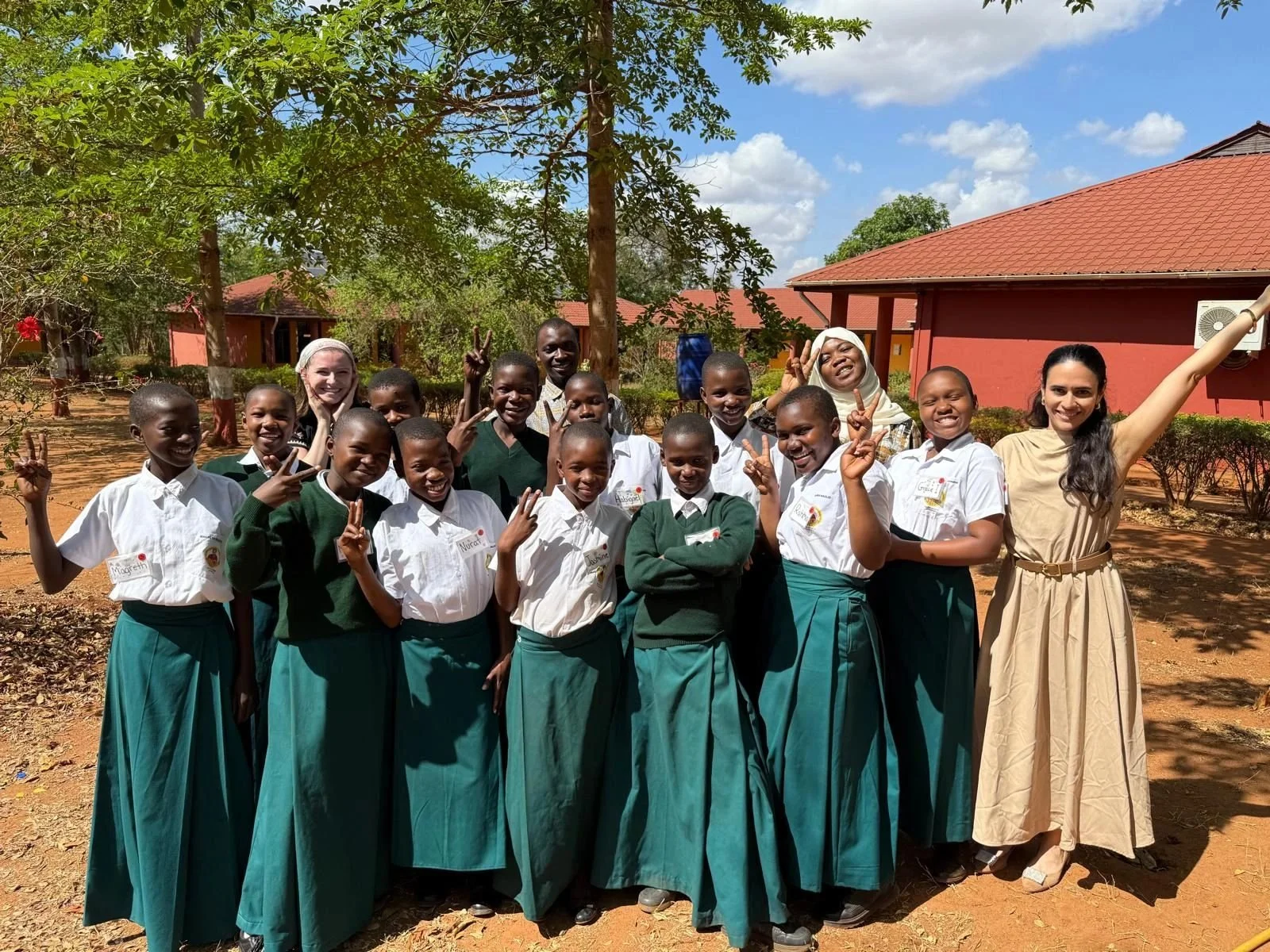
Local music, dancing, and joy filled the arrival hall, an energy that would define her next two weeks volunteering at the SEGA Girls’ School, a partner of Nurturing Minds, and a boarding school designed to give Tanzanian girls from vulnerable backgrounds not just an education, but safety, mentorship, and the confidence to pursue futures they once thought impossible.
“It was the first time I’d seen a country welcome every visitor like that,” she says. “I had just landed, and there was already a celebration.”
Luiza, a Senior Finance Compliance Manager at Baker Hughes, came to Tanzania as one of the volunteers in the English Fluency Program (EFP), a two-week immersive experience designed to help SEGA students strengthen their ability to speak English and build academic confidence.
In her own words below, Luiza reflects on the girls she met, the challenges of teaching, the joy of learning together, and the lasting impact of her time in Tanzania.
What were your first impressions of Tanzania?
My first impression was great. At the airport, when our plane arrived, there was a welcome ceremony with local music, and people dancing. It was a very nice surprise. I travel a lot, and this was the first time I’ve ever experienced this kind of welcoming presentation for everybody who arrives from anywhere in the world. I had just landed and there was a party!
Where did you stay while you were volunteering?
Volunteers stay at the Nurturing Minds and SEGA Visitor House, which is on SEGA’s campus but separate from the girls’ dormitories. Whether you’re part of the English Fluency Program, the STEAM Program, or the Robotics Program, the Visitor House is where you live during your time at SEGA. It’s comfortable, safe, and makes it easy to be fully immersed in school life while still giving volunteers their own space.
How many girls were you assigned to work with?
The school has around 260 students in total across all grade levels, from Form I to Form IV, between ages 12 and 16. But the English Fluency Program focuses specifically on the newest girls, the incoming Pre-Form I students who have just arrived on campus and are transitioning from learning in Kiswahili or Swahili in school to learning entirely in English. My cohort of volunteers was responsible for 56 girls.
What struck you most about the girls?
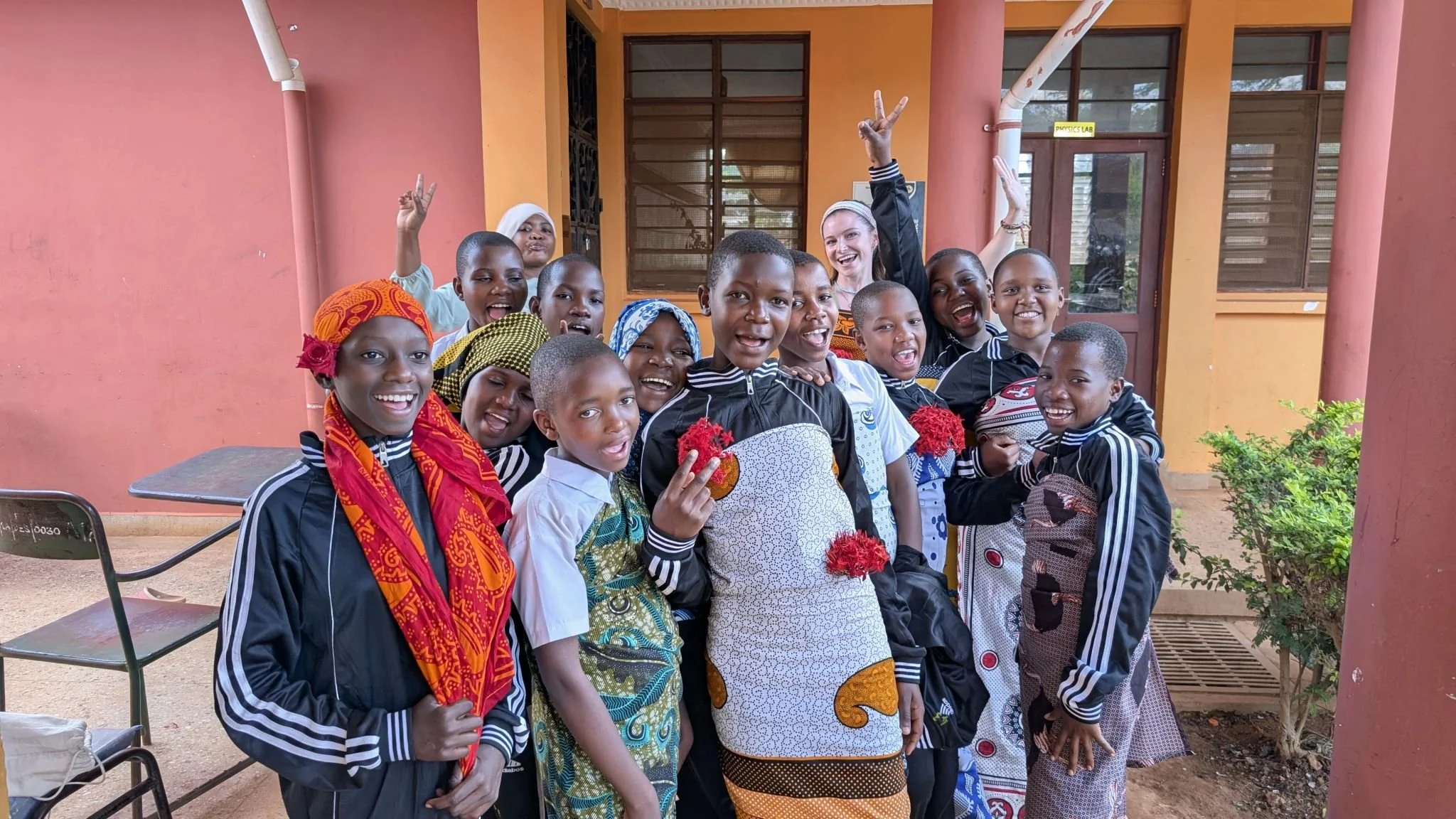
All the girls come from situations where life is tough. They are not privileged. The way they approach life is very genuine. They know they are there to learn, so they are curious. Often, they are shy because they don’t yet fully understand English, but they are very eager. They learn fast because they want to. At the same time, they are very caring and want to help with everything.
What were the biggest challenges of the experience?
Nurturing Minds and SEGA welcome volunteers even without teaching experience. I had never taught before, but they arrange the classes in a way that anyone can understand how to do it.
The challenge is learning to explain things in a way the girls understand. Sometimes you have to change the program because you can see in their eyes that they aren’t fully following. By the third lesson, you have your own way, and you really start to engage.
The songs, storytelling, and lesson materials are so well prepared. And volunteers support each other by sharing what worked.
What did a typical day at SEGA look like?
In the mornings and afternoons, we held classes on various topics. For example, one lesson helped the girls get used to learning present and past tense in English.
In the afternoon we met with the organizer to review what worked and prepare the next day's activities. Each group was led by two volunteers, and one SEGA graduate as a Teaching Assistant.
What was the most meaningful part of your time with the girls?
We went on a two-day safari to Mikumi National Park. The girls were so excited. They talked and played games on the bus. For many of them, going on safari had only been a dream because they come from very poor villages.
They were genuinely curious, asking the guide so many questions. We saw hippos, zebras, lions, giraffes, it was beautiful. On the way back, they fell asleep from exhaustion after all the excitement. It was such a beautiful bonding moment outside of the classroom.
How did the program impact you personally?
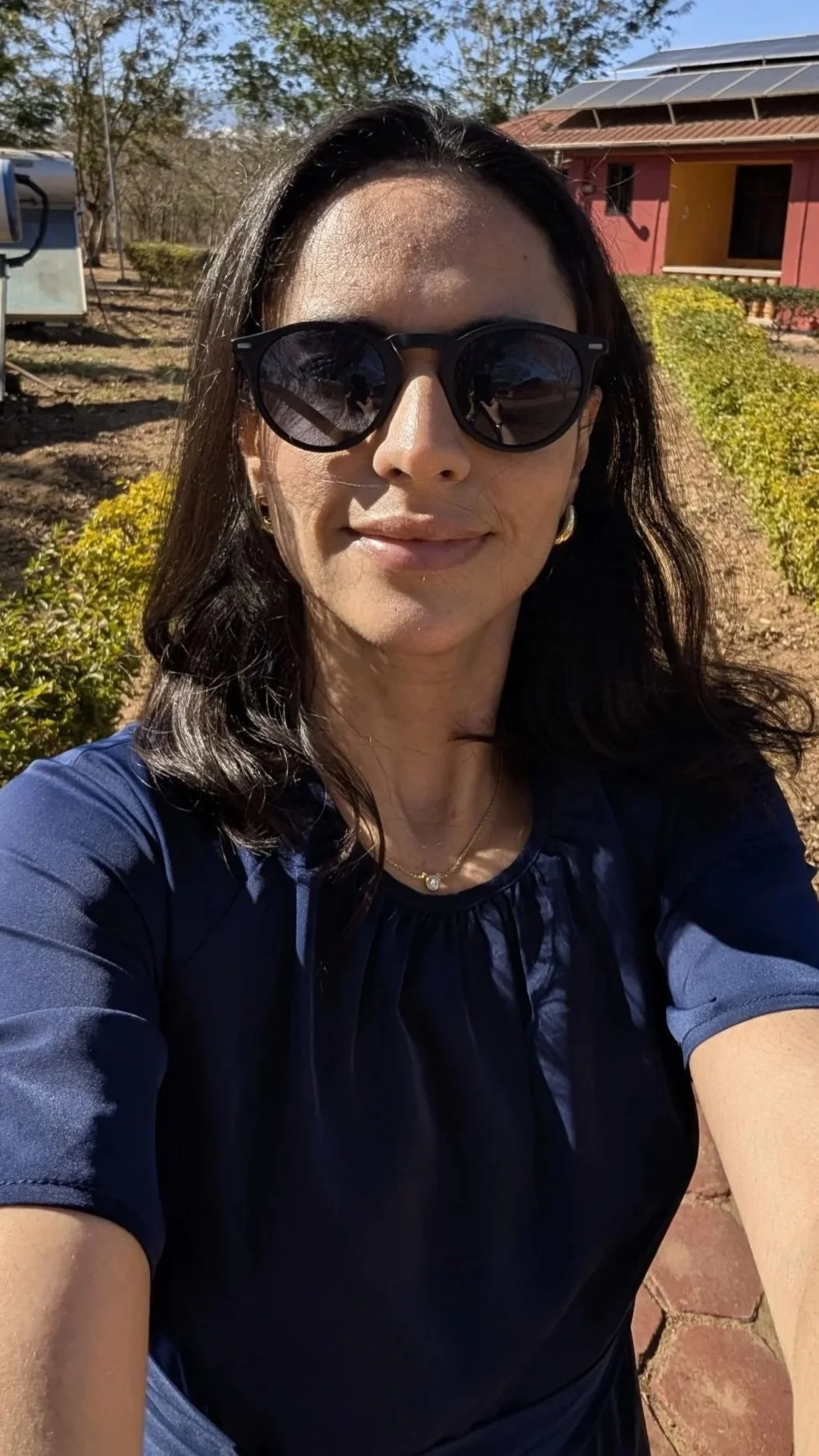
Volunteering gave me a front-row seat to the incredible impact Nurturing Minds and SEGA are having. These girls work so hard. Their resilience and eagerness to learn reminded me why programs like these are so important.
It reinforced my lifelong desire to help change young lives for the better.
Your Chance to Make an Impact
Luiza’s experience is one story among many, a testament to what’s possible when volunteers from around the world invest time, heart, and skill into helping girls rise.
At SEGA, the English Fluency Program is more than language learning. It’s confidence-building, mentorship, cross-cultural exchange, and a bridge to futures once out of reach.
If you’re inspired by her story and want to support SEGA girls through education and empowerment, you can:
👉 Join the next volunteer program cohort
👉 Join the next English Fluency Program cohort
👉 Consider becoming a student scholarship supporter through Nurturing Minds
👉 Share this story to help raise awareness
Small acts can make a profound difference for the girls, and for you.
“If you’ve ever thought about volunteering your time, knowledge, or skills,” Luiza says,
“do it. It will change you more than you expect.”